Skin
Itchy Skin and Menopause
Formication, dryness and skin sensitivity — causes and relief.
Falling oestrogen thins skin and reduces oil production. Some women experience formication — a crawling sensation. Skin barrier care and, for many, HRT help.
'Formication' — a crawling, tingling or ant-under-the-skin sensation — is one of the more unsettling symptoms of perimenopause. Dry, thinner, more sensitive skin is even more common. Both are driven by falling oestrogen, and both respond well to a combination of daily skincare, lifestyle changes and, where appropriate, HRT. Very often, women are told this is 'just ageing skin' or reach for stronger and stronger moisturisers without addressing the underlying hormonal driver.
Why skin changes at menopause
- Oestrogen supports collagen production, skin thickness, elasticity and the natural oil (sebum) barrier.
- Falling levels reduce hydration and thin the outer skin layer by up to 30% in the first five post-menopausal years.
- The skin becomes more permeable — moisture leaves faster, irritants get in more easily.
- Nerve endings become more sensitive, producing the crawling or itching feelings of formication.
- Rosacea, eczema and adult acne all commonly flare or reappear.
Daily care that helps most
- Fragrance-free emollients twice a day, applied to damp skin: CeraVe, La Roche-Posay Lipikar, Cetraben, Epaderm or E45.
- Lukewarm (not hot) showers kept under 10 minutes; pat dry rather than rub.
- Non-soap cleansers (Cetaphil, La Roche-Posay Toleriane, Dermol 500) — traditional soap strips the skin further.
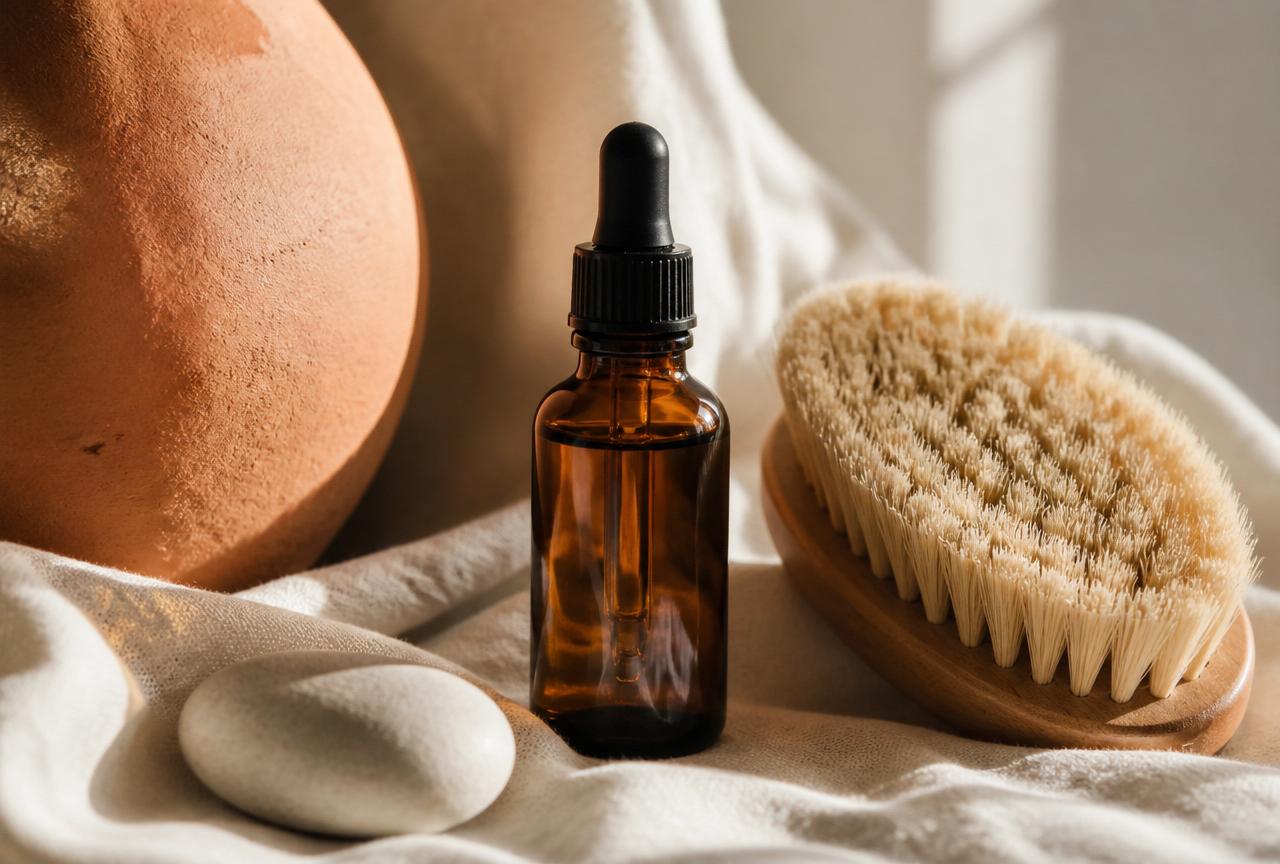
- Add a facial oil (squalane, jojoba) as the final evening step to seal in moisture.
- Sunscreen SPF 30+ daily — sun-damaged menopausal skin loses collagen even faster.
Diet, hydration and lifestyle
- 2 litres of water a day, plus herbal teas.
- Omega-3s (oily fish twice a week or a 2 g EPA+DHA supplement) reduce inflammation.
- Adequate protein (1.2–1.6 g per kg body weight) supports collagen synthesis.
- Reduce alcohol — it dehydrates and worsens flushing and itch.
- Humidifier in the bedroom if you sleep in centrally heated or air-conditioned rooms.
When to consider medication
- Persistent formication and generalised itch often ease on HRT within 8–12 weeks.
- Non-sedating antihistamines (cetirizine, loratadine) for daytime itch.
- Sedating antihistamines (hydroxyzine, promethazine) at night if itch disturbs sleep.
- Short courses of topical steroid for flared eczema patches.
Common skin conditions that flare or emerge in midlife
- Adult acne along the jawline and chin — often androgen-driven; responds to topical retinoids, azelaic acid and sometimes spironolactone.
- Rosacea — flushing, telangiectasia and papulopustular lesions; trigger avoidance, brimonidine and metronidazole gel help.
- Perioral dermatitis — small red bumps around the mouth; treat by stopping topical steroids and using a short course of topical/oral antibiotics.
- Lichen sclerosus of the vulva — pale, itchy, atrophic skin needing potent topical steroid; do not miss it.
What we screen for in clinic
- Iron and ferritin, thyroid function, HbA1c, vitamin D and B12 — itch and skin quality mirror internal deficiencies.
- Coeliac screen if itchy skin accompanies GI symptoms; dermatitis herpetiformis is a specific coeliac skin sign.
- Kidney and liver function if itch is generalised and severe without rash.
When to see a doctor promptly
- New rash, especially with weight loss, night sweats or jaundice — needs same-week review.
- Localised patches that don't move, itch or bleed — dermatology referral is sensible.
- Blistering, widespread rash, or itching in pregnancy or with new medications — urgent review.
- Any changing pigmented lesion, or a new lump — use dermoscopy and consider 2-week-wait dermatology referral.
Key takeaway
Menopausal itch and formication are real and treatable. If moisturiser alone hasn't worked after a month of consistent use, it's usually time to talk about hormones — and to screen for the internal drivers (iron, thyroid, coeliac) that also show up as skin symptoms.
How Dr Awal approaches this in clinic
Every consultation starts with your full story — symptoms, cycle, medical history, family history and what you've already tried. From there we look at whether hormonal treatment, non-hormonal options, lifestyle changes or a combination will give you the best result, and we tailor the plan to your age, risk factors and preferences.
- A detailed 60 minute first appointment — no rushed 10-minute slots.
- Evidence-based recommendations aligned with NICE NG23 and BMS guidance.
- Body-identical HRT considered first-line where appropriate.
- Shared-care letters sent to your NHS GP so treatment can continue affordably.
- Follow-up at 3 months to fine-tune your regimen and address side effects.
- Ongoing annual reviews so your plan evolves with you.
Common questions we hear about this
Do I need to be at a certain age to be seen?
No. We see women in early perimenopause (often late 30s and 40s), through post-menopause and beyond. Age alone doesn't decide whether treatment is right — symptoms, health history and goals do.
Will my GP continue the prescription?
In most cases yes. After your consultation we send a detailed shared-care letter with the diagnosis, treatment plan and rationale so your NHS GP can prescribe on the NHS. Not every practice accepts shared care — we'll discuss this in your appointment.
What if I've tried HRT before and it didn't suit me?
Very common — often the type, dose or route wasn't right rather than HRT itself. We review what you've tried, why it didn't work, and adjust accordingly. Many women who thought HRT wasn't for them do well on a different preparation.
How long will I need to stay on treatment?
There is no set upper time limit for HRT. Current BMS and NICE guidance supports continuing HRT for as long as the benefits outweigh the risks for you personally. We review this together every year so you stay in control of the decision.
Where do you see patients?
All consultations at Pause and Co Healthcare are conducted securely via video, allowing us to support patients anywhere in the UK. Prescriptions and shared care arrangements are managed in the same way, regardless of your location.
About the author
Dr Nadira Awal is a British Menopause Society Advanced Menopause Specialist with 15+ years' NHS and private experience. She holds the BMS Advanced Certificate in Menopause Care, sits on the BMS Programme Planning Group, and advises the UK Government Menopause Strategy Group. Read her full profile.
Sources & further reading
General information only — not a substitute for personalised medical advice. Always speak to your GP or a menopause specialist about your own situation.
Talk it through
Book a private consultation with Dr Awal
Get evidence-based, personalised advice on itchy skin and menopause and any related concerns.