
HRT
HRT for Women with Migraines
Migraine with aura is not a barrier to HRT — but the route and dose matter.

Transdermal oestrogen avoids the fluctuating oral peaks that trigger migraine. Continuous rather than cyclical regimens are usually kinder to migraine sufferers.
Migraine and menopause are deeply entwined. Around 20–25% of women live with migraine, and for many the perimenopausal years — with their wild oestrogen swings — are the worst they've ever known. The good news, and the message most women aren't given clearly enough: migraine, including migraine with aura, is NOT a contraindication to HRT. What matters is HOW oestrogen is delivered. Transdermal HRT (patch, gel, spray) bypasses the liver, keeps blood levels steadier and is safe in migraine — including migraine with aura. Get the delivery right and, for many women, hormonal migraine actually improves on treatment. Get it wrong and you can flare a stable migraine pattern. This distinction is missed surprisingly often in general practice.
Why migraine gets worse in perimenopause
- Migraine is exquisitely sensitive to falling oestrogen — the classic 'menstrual migraine' hits when levels crash before a period.
- In perimenopause, oestrogen doesn't just fall — it lurches up and down unpredictably, creating repeated 'oestrogen withdrawal' triggers.
- Sleep disruption, stress, alcohol tolerance changes and disrupted routines all pile in as additional triggers.
- Frequency and intensity peak in the year or two before periods stop, then often ease post-menopause once levels stabilise low.
- Around 8–15% of migraine sufferers have aura — visual disturbance, tingling or speech changes preceding the headache — and this is where prescribing confusion is greatest.
Combined oral contraceptives vs HRT — the crucial distinction
- The oestrogen dose in a combined oral contraceptive is roughly 4–5 times higher than in typical HRT, and it's taken orally.
- Combined oral contraceptives ARE contraindicated in migraine with aura because of ischaemic stroke risk.
- HRT is a completely different situation: much lower dose, physiological replacement, and (when transdermal) no liver first-pass effect.
- The BMS, NICE NG23 and the International Headache Society all agree — transdermal HRT is safe in migraine, including migraine with aura.
- If a GP tells you 'you can't have HRT because of your migraine with aura', ask for a specialist opinion. This is a common but outdated view.

The migraine-friendly HRT regimen
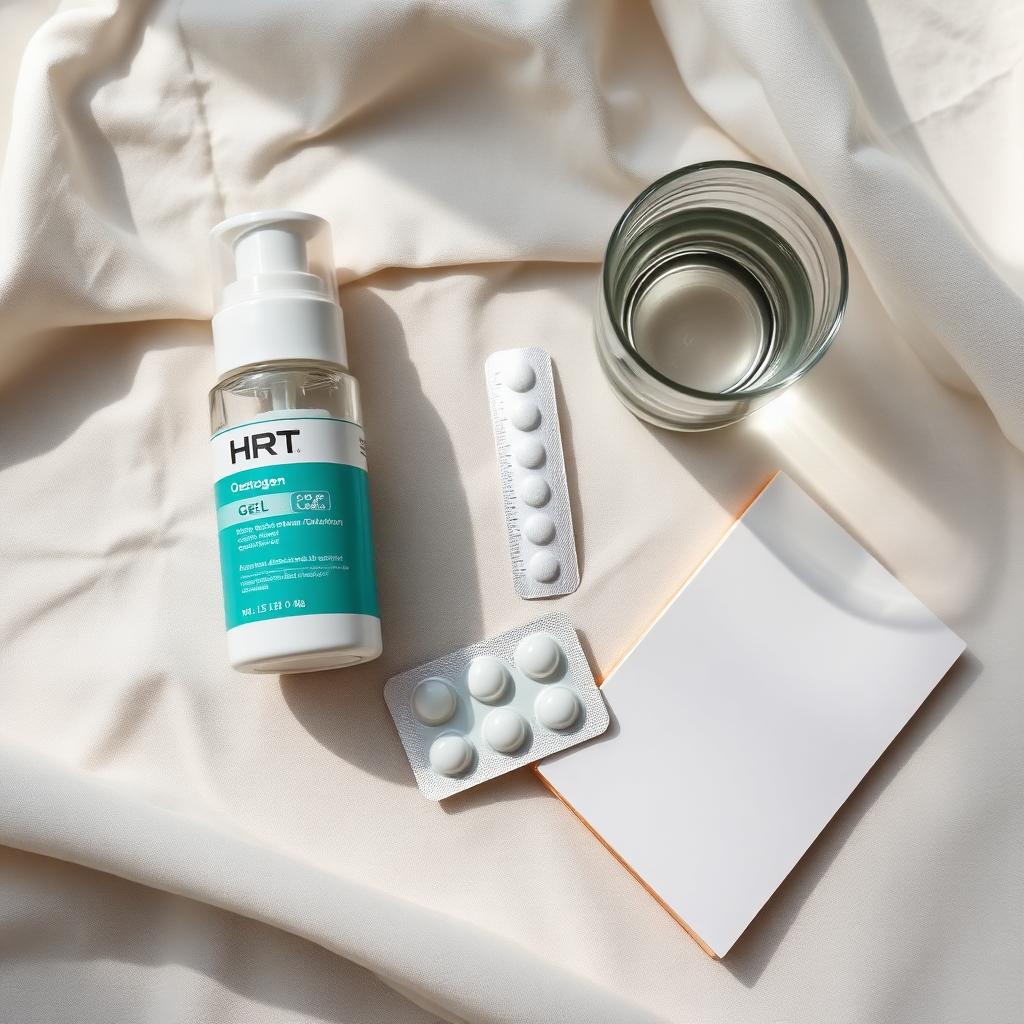
- Transdermal oestrogen always — patch, gel or spray. Never oral oestrogen if migraine is a concern.
- Continuous rather than cyclical progestogen — cyclical regimens create monthly hormone swings that can flare migraine.
- Body-identical micronised progesterone (Utrogestan) is usually best tolerated; the Mirena is another excellent option.
- Start LOW and titrate slowly — big dose jumps are a well-recognised migraine trigger. Begin at 25–37.5 mcg patch or 1–2 pumps of gel.
- Allow 6–8 weeks at each dose before deciding whether it's working — migraine patterns need time to stabilise.
- Once levels are steady, many women see their hormonal migraine improve substantially.
What to do if HRT flares migraine initially
- Don't panic — an early flare doesn't mean HRT is wrong for you. Levels are still equilibrating.
- Check the delivery: patches can absorb inconsistently; rotating sites and pressing firmly helps.
- Split the dose: half a patch changed twice a week, or gel split morning and evening, smooths peaks.
- Add magnesium 300–400 mg daily — a well-evidenced migraine preventer with a good safety profile.
- Review progestogen: if migraines cluster in the progestogen days of a cyclical regimen, switching to continuous or to Mirena often resolves this.
- Consider a lower starting dose and slower titration if the flare persists.
Everyday migraine hygiene during perimenopause
- Sleep: consistent bed and wake times, even at weekends, matter more in midlife than ever.
- Hydration: 1.5–2 litres of water daily; dehydration is a top-three trigger.
- Meals: don't skip — blood sugar dips trigger migraine reliably.
- Caffeine: keep intake consistent day-to-day; withdrawal on weekends is a classic hidden trigger.
- Alcohol: red wine and prosecco are notorious; some women find they can no longer tolerate any alcohol during perimenopause.
- Track for 6–8 weeks in a diary or app — patterns emerge that aren't obvious in memory.
When to seek same-day medical review
- A migraine that feels different from your usual pattern — worse, longer, or with new features.
- Aura lasting over an hour, weakness on one side, speech changes, or confusion.
- Sudden 'thunderclap' headache reaching peak intensity within seconds to a minute.
- Headache with fever, neck stiffness, rash or new visual loss.
- Any of these — dial NHS 111 or attend A&E; they need urgent assessment.
Key takeaway
Migraine, including migraine with aura, is not a barrier to HRT — but the route and rhythm matter enormously. Transdermal oestrogen, continuous progestogen, slow titration and good sleep hygiene are the four pillars. Get them right and hormonal migraine often improves on treatment.
How Dr Awal approaches this in clinic
Every consultation starts with your full story — symptoms, cycle, medical history, family history and what you've already tried. From there we look at whether hormonal treatment, non-hormonal options, lifestyle changes or a combination will give you the best result, and we tailor the plan to your age, risk factors and preferences.
- A detailed 60 minute first appointment — no rushed 10-minute slots.
- Evidence-based recommendations aligned with NICE NG23 and BMS guidance.
- Body-identical HRT considered first-line where appropriate.
- Shared-care letters sent to your NHS GP so treatment can continue affordably.
- Follow-up at 3 months to fine-tune your regimen and address side effects.
- Ongoing annual reviews so your plan evolves with you.
Common questions we hear about this
Do I need to be at a certain age to be seen?
No. We see women in early perimenopause (often late 30s and 40s), through post-menopause and beyond. Age alone doesn't decide whether treatment is right — symptoms, health history and goals do.
Will my GP continue the prescription?
In most cases yes. After your consultation we send a detailed shared-care letter with the diagnosis, treatment plan and rationale so your NHS GP can prescribe on the NHS. Not every practice accepts shared care — we'll discuss this in your appointment.
What if I've tried HRT before and it didn't suit me?
Very common — often the type, dose or route wasn't right rather than HRT itself. We review what you've tried, why it didn't work, and adjust accordingly. Many women who thought HRT wasn't for them do well on a different preparation.
How long will I need to stay on treatment?
There is no set upper time limit for HRT. Current BMS and NICE guidance supports continuing HRT for as long as the benefits outweigh the risks for you personally. We review this together every year so you stay in control of the decision.
Where do you see patients?
All consultations at Pause and Co Healthcare are conducted securely via video, allowing us to support patients anywhere in the UK. Prescriptions and shared care arrangements are managed in the same way, regardless of your location.
About the author
Dr Nadira Awal is a British Menopause Society Advanced Menopause Specialist with 15+ years' NHS and private experience. She holds the BMS Advanced Certificate in Menopause Care, sits on the BMS Programme Planning Group, and advises the UK Government Menopause Strategy Group. Read her full profile.
Sources & further reading
General information only — not a substitute for personalised medical advice. Always speak to your GP or a menopause specialist about your own situation.
Talk it through
Book a private consultation with Dr Awal
Get evidence-based, personalised advice on hrt for women with migraines and any related concerns.
Related in HRT
Continue reading

A Comprehensive Guide to HRT
Types of HRT, oestrogen vs progesterone, benefits, side effects — and how to manage them.
Read guide

NHS vs Private HRT in the UK
How NHS and private HRT compare — costs, wait times, choice of preparations and how to transfer prescriptions.
Read guide
HRT Shortages in the UK
Why HRT supply issues happen, current UK availability and safe swaps if your prescription is unavailable.
Read guide