
Gynae
Contraception in Perimenopause
When to stop contraception, FSRH guidance and how the Mirena doubles as HRT progestogen.

Fertility can persist for years after periods become irregular. The FSRH sets clear UK guidance on when contraception is still needed, when it can be safely stopped, and how a Mirena coil can serve double duty as the progestogen part of HRT.
One of the biggest misconceptions in perimenopause is that fertility has already gone. It hasn't. Cycles become erratic, ovulation becomes unpredictable and pregnancy at 45 or even 50 is uncommon but very much possible — and unplanned pregnancy at this stage carries higher medical risk for both mother and baby. The Faculty of Sexual and Reproductive Healthcare (FSRH) sets clear UK guidance on which methods are safest during perimenopause and when you can finally stop contraception altogether. Getting this right also unlocks some of the most elegant regimens in HRT.
When you can safely stop contraception (FSRH)
- Under 50 with periods stopped: continue contraception for two years after your last natural period.
- Age 50 and over with periods stopped: continue contraception for one year after your last natural period.
- Age 55 for everyone: contraception can be stopped regardless of bleeding pattern — spontaneous ovulation after 55 is exceptionally rare.
- On the combined pill or Depo-Provera: these mask periods, so age rather than bleeding pattern usually decides.
- On a Mirena or POP: if you're not sure whether you've had your last period, an FSH blood test two months apart can help — but interpret it cautiously.
Best options in perimenopause
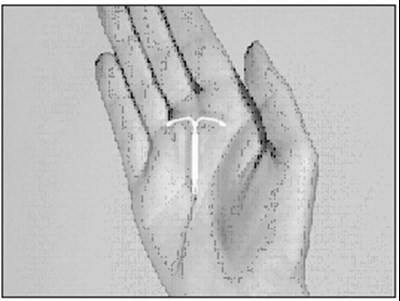
- Mirena IUS — a 5-year contraceptive AND the progestogen half of HRT in a single device; often the most elegant option in perimenopause.
- Progestogen-only pill (desogestrel-type, e.g. Cerazette or Cerelle) — safe over 40, no oestrogen so no clot or migraine concern, doesn't mask menopause the way the combined pill does.
- Copper coil — completely hormone-free, doesn't interfere with HRT decisions, useful if you're avoiding hormones altogether.
- Condoms — no interaction with HRT, no hormones and helpful protection against STIs at a stage of life when new relationships are common.
- Progestogen implant (Nexplanon) — long-acting, effective, reversible; a good choice for women who want to set-and-forget.
Options usually avoided after 40 or 50
- Combined hormonal contraception (pill, patch, ring) is generally stopped at 50 because oestrogen-containing methods raise the risk of clot, stroke and heart attack as women age.
- Combined methods are also usually avoided with migraine with aura, BMI over 35, smoking after 35, or a personal history of clot.
- Injectable Depo-Provera can lower bone density — a concern already in perimenopause and post-menopause; alternatives are usually preferred.
Bringing contraception and HRT together
- Oestrogen in HRT (patch, gel or spray) is not contraceptive — you still need one of the methods above if pregnancy is possible.
- The Mirena is licensed for 5 years as the progestogen part of HRT — the neatest one-device solution in perimenopause.
- The progestogen-only pill can be taken alongside oestrogen HRT — but Utrogestan (body-identical progesterone) is preferred where possible.
- If you're on the combined pill and struggling with perimenopausal symptoms, switching to HRT + a separate contraceptive is often the better long-term plan.
Common concerns we hear in clinic
- 'I haven't had a period in months — do I still need contraception?' Under 50, yes, for two years after your last period.
- 'I'm 52 and my Mirena is expiring — do I need a new one?' Often yes, for HRT endometrial protection; a specialist can advise on timing.
- 'Can I use natural family planning?' Cycles are too erratic in perimenopause to rely on fertility awareness alone.
- 'What about emergency contraception?' Still relevant in perimenopause — the copper coil and ulipristal (ellaOne) are both options.
Key takeaway
Perimenopause is not a fertility-free zone. Choosing the right method — usually the Mirena, POP or a non-hormonal option — protects you from unplanned pregnancy and, in the case of the Mirena, doubles up as an elegant part of your HRT regimen.
How Dr Awal approaches this in clinic
Every consultation starts with your full story — symptoms, cycle, medical history, family history and what you've already tried. From there we look at whether hormonal treatment, non-hormonal options, lifestyle changes or a combination will give you the best result, and we tailor the plan to your age, risk factors and preferences.
- A detailed 60 minute first appointment — no rushed 10-minute slots.
- Evidence-based recommendations aligned with NICE NG23 and BMS guidance.
- Body-identical HRT considered first-line where appropriate.
- Shared-care letters sent to your NHS GP so treatment can continue affordably.
- Follow-up at 3 months to fine-tune your regimen and address side effects.
- Ongoing annual reviews so your plan evolves with you.
Common questions we hear about this
Do I need to be at a certain age to be seen?
No. We see women in early perimenopause (often late 30s and 40s), through post-menopause and beyond. Age alone doesn't decide whether treatment is right — symptoms, health history and goals do.
Will my GP continue the prescription?
In most cases yes. After your consultation we send a detailed shared-care letter with the diagnosis, treatment plan and rationale so your NHS GP can prescribe on the NHS. Not every practice accepts shared care — we'll discuss this in your appointment.
What if I've tried HRT before and it didn't suit me?
Very common — often the type, dose or route wasn't right rather than HRT itself. We review what you've tried, why it didn't work, and adjust accordingly. Many women who thought HRT wasn't for them do well on a different preparation.
How long will I need to stay on treatment?
There is no set upper time limit for HRT. Current BMS and NICE guidance supports continuing HRT for as long as the benefits outweigh the risks for you personally. We review this together every year so you stay in control of the decision.
Where do you see patients?
All consultations at Pause and Co Healthcare are conducted securely via video, allowing us to support patients anywhere in the UK. Prescriptions and shared care arrangements are managed in the same way, regardless of your location.
About the author
Dr Nadira Awal is a British Menopause Society Advanced Menopause Specialist with 15+ years' NHS and private experience. She holds the BMS Advanced Certificate in Menopause Care, sits on the BMS Programme Planning Group, and advises the UK Government Menopause Strategy Group. Read her full profile.
Sources & further reading
General information only — not a substitute for personalised medical advice. Always speak to your GP or a menopause specialist about your own situation.
Talk it through
Book a private consultation with Dr Awal
Get evidence-based, personalised advice on contraception in perimenopause and any related concerns.
Related in Gynae