
Gynae
What is the Mirena Coil?
How the Mirena works as contraception and as HRT progestogen.
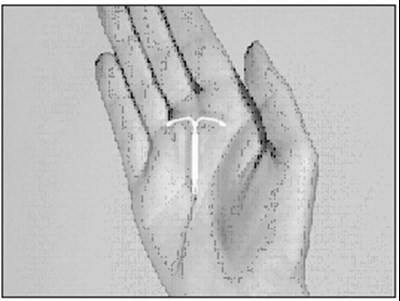
The Mirena is a hormonal IUD that also provides the progestogen part of HRT for up to 5 years. It's an elegant option for many women in perimenopause.
The Mirena is a small, T-shaped hormonal intrauterine device that quietly does three jobs at once — reliable contraception, control of heavy or unpredictable bleeding, and delivery of the progestogen half of HRT directly to the womb lining. For many perimenopausal women it is the single most useful device we have, particularly when periods have become heavy or erratic and you also want the option of adding oestrogen. It sits inside the uterus for up to 8 years for contraception and 5 years when used as the progestogen component of HRT, and is licensed and widely used across UK general practice, sexual health clinics and menopause services.
How the Mirena works
- Releases a very small daily dose of levonorgestrel (a synthetic progestogen) directly onto the endometrium.
- Thins the womb lining dramatically, which is why bleeding becomes lighter or stops.
- Thickens cervical mucus and inhibits sperm function, providing contraceptive efficacy above 99%.
- Systemic absorption is very low — most side effects associated with oral progestogens are much less common.
The three clinical uses
- Contraception — licensed for up to 8 years' use in the UK (extended from the original 5-year licence in 2024).
- Heavy menstrual bleeding — first-line treatment recommended by NICE, reducing blood loss by 70–95%.
- Progestogen protection in HRT — licensed for 5 years in this role, combined with oestrogen (patch, gel, spray or oral) to protect the womb lining.
What insertion is really like
- The procedure itself takes 5–10 minutes and is done in an outpatient or GP setting.
- Cramping is common during and for 24–48 hours after — take ibuprofen or paracetamol beforehand if not contraindicated.
- Local anaesthetic (gel, injection or a cervical block) is available on request and is increasingly offered as standard.
- You'll usually be advised to have someone with you and to avoid driving straight afterwards.
- A check-up 6 weeks later confirms threads are visible and the device is well positioned.
Bleeding patterns after fitting
- Irregular spotting or light bleeding is common for the first 3–6 months as the lining thins.
- By 12 months, around 20% of women have no bleeding at all, and most others have very light periods.
- Persistent heavy or painful bleeding beyond 6 months should be reviewed — most settles, but occasionally the device is malpositioned.
- If you already have HRT oestrogen on board, unexpected bleeding after 6 months warrants a specialist review and often an ultrasound.
Who it particularly suits
- Women with heavy or erratic perimenopausal periods.
- Women who develop mood, bloating or breast-tenderness side effects on oral progestogens.
- Women who want combined contraception plus HRT progestogen in a single set-and-forget solution.
- Women with a history of migraine on oral progestogens (Mirena is much less likely to trigger these).
When it may not be right
- Active pelvic infection or untreated STI — treat first.
- Unexplained abnormal bleeding awaiting investigation — investigate first, insert after.
- Distorted uterine cavity from large fibroids or congenital variants — imaging first, sometimes specialist fitting under scan.
- Current or recent breast cancer — discuss with your oncology team; risk-benefit is individual.
- Known hypersensitivity to levonorgestrel or copper (the frame contains a small amount).
Removal and what to expect afterwards
- Removal is quicker than insertion (usually seconds) and can be done at any time in your cycle.
- Fertility returns immediately if it was being used for contraception — plan accordingly.
- If you were using it as HRT progestogen, you will need to switch to an alternative progestogen the same day to keep the womb lining protected.
- It's often replaced there and then if you're continuing HRT — no gap needed.
Key takeaway
For the right woman the Mirena is quietly transformative — bleeding, contraception and progestogen protection solved by one small device. It's not for everyone, but it deserves a fair conversation.
How Dr Awal approaches this in clinic
Every consultation starts with your full story — symptoms, cycle, medical history, family history and what you've already tried. From there we look at whether hormonal treatment, non-hormonal options, lifestyle changes or a combination will give you the best result, and we tailor the plan to your age, risk factors and preferences.
- A detailed 60 minute first appointment — no rushed 10-minute slots.
- Evidence-based recommendations aligned with NICE NG23 and BMS guidance.
- Body-identical HRT considered first-line where appropriate.
- Shared-care letters sent to your NHS GP so treatment can continue affordably.
- Follow-up at 3 months to fine-tune your regimen and address side effects.
- Ongoing annual reviews so your plan evolves with you.
Common questions we hear about this
Do I need to be at a certain age to be seen?
No. We see women in early perimenopause (often late 30s and 40s), through post-menopause and beyond. Age alone doesn't decide whether treatment is right — symptoms, health history and goals do.
Will my GP continue the prescription?
In most cases yes. After your consultation we send a detailed shared-care letter with the diagnosis, treatment plan and rationale so your NHS GP can prescribe on the NHS. Not every practice accepts shared care — we'll discuss this in your appointment.
What if I've tried HRT before and it didn't suit me?
Very common — often the type, dose or route wasn't right rather than HRT itself. We review what you've tried, why it didn't work, and adjust accordingly. Many women who thought HRT wasn't for them do well on a different preparation.
How long will I need to stay on treatment?
There is no set upper time limit for HRT. Current BMS and NICE guidance supports continuing HRT for as long as the benefits outweigh the risks for you personally. We review this together every year so you stay in control of the decision.
Where do you see patients?
All consultations at Pause and Co Healthcare are conducted securely via video, allowing us to support patients anywhere in the UK. Prescriptions and shared care arrangements are managed in the same way, regardless of your location.
About the author
Dr Nadira Awal is a British Menopause Society Advanced Menopause Specialist with 15+ years' NHS and private experience. She holds the BMS Advanced Certificate in Menopause Care, sits on the BMS Programme Planning Group, and advises the UK Government Menopause Strategy Group. Read her full profile.
Sources & further reading
General information only — not a substitute for personalised medical advice. Always speak to your GP or a menopause specialist about your own situation.
Talk it through
Book a private consultation with Dr Awal
Get evidence-based, personalised advice on what is the mirena coil? and any related concerns.
Related in Gynae
Continue reading

Contraception in Perimenopause
When to stop contraception, FSRH guidance and how the Mirena doubles as HRT progestogen.
Read guide

Heavy Bleeding in the Menopause
When heavy periods need investigating and what treatments help.
Read guide

Endometriosis
How endometriosis behaves during perimenopause and postmenopause.
Read guide