
Weight & Nutrition
Protein in Midlife — How Much and Why
Muscle loss speeds up in menopause. Protein spread through the day protects it.
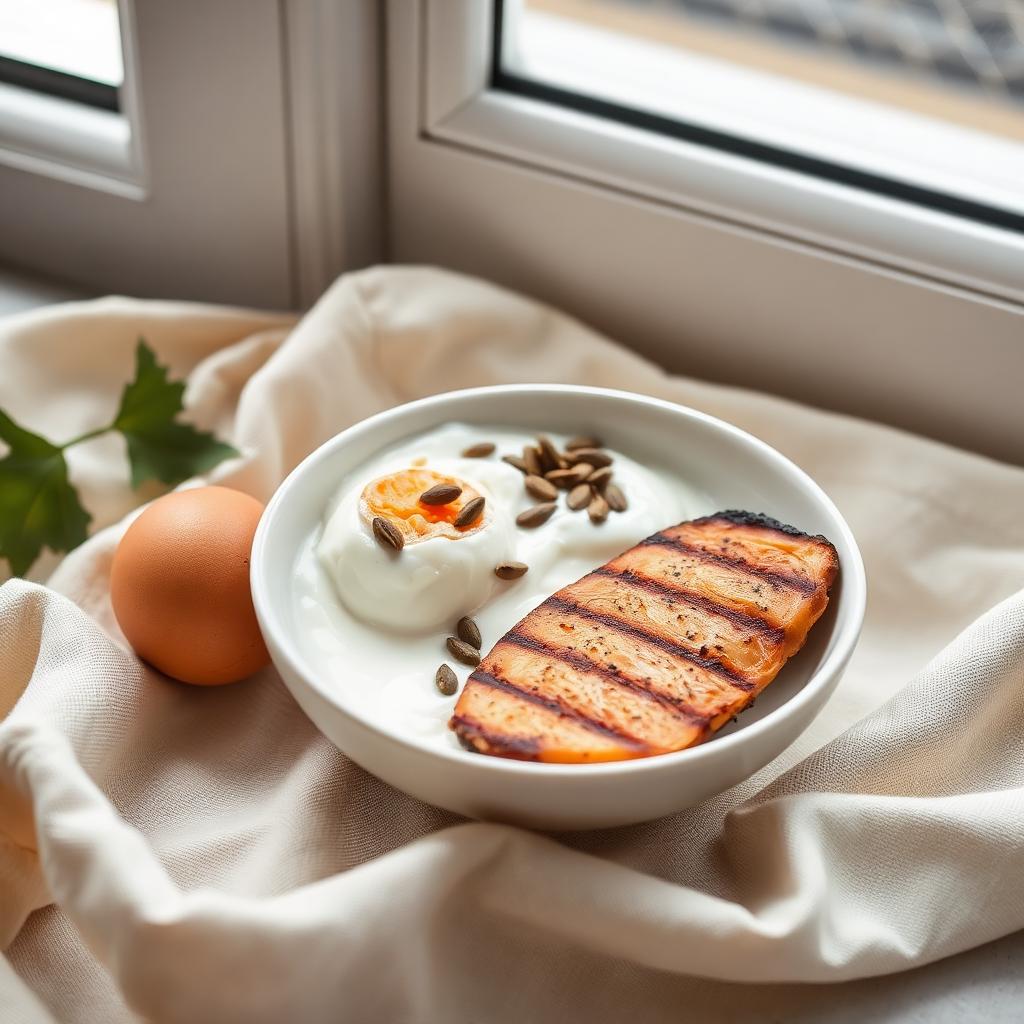
Aim for 1.2–1.6 g/kg/day, split roughly evenly across meals. Combined with resistance training, this is the single strongest lever for midlife body composition.
Protein plus resistance training is the single biggest body-composition lever after 45 — and by a wide margin the most under-appreciated. Most UK midlife women eat less than 60 g of protein a day and get almost all of it at dinner, when it can do the least. The result is anabolic resistance (older muscle needs a larger protein stimulus for the same growth response), gradual sarcopenia, poor recovery from exercise, hunger between meals and steadily rising visceral fat. Fixing protein — quantity, timing, distribution and quality — is the highest-yield nutritional change in perimenopause and postmenopause, and it costs nothing to implement.
The evidence-based target
- 1.2–1.6 g protein per kg of body weight per day for most active midlife women — significantly higher than the outdated UK RDA of 0.75 g/kg.
- Athletes, heavy lifters or those trying to reverse muscle loss: 1.6–2.0 g/kg/day.
- For a 65 kg woman, that's 78–104 g of protein a day — much more than most women get.
- Spread across 3–4 meals rather than a single evening hit — muscle protein synthesis is stimulated meal by meal, and each stimulus lasts around 3–5 hours.
- Aim for 25–35 g of protein per meal — the 'leucine threshold' needed to maximally stimulate muscle protein synthesis in older adults.
Why timing matters more after 45
- Anabolic resistance: older muscle needs roughly 40% more protein per meal to trigger the same anabolic response as younger muscle.
- Sub-threshold meals (under 20 g protein) barely stimulate muscle protein synthesis at all — a 10 g breakfast of toast and jam is metabolically almost zero.
- Front-loading protein — a substantial breakfast, then lunch and dinner — supports lean mass, appetite regulation and blood sugar far better than the typical UK pattern of low-protein breakfast, low-protein lunch, high-protein dinner.
- Protein within 60–90 minutes of a strength session amplifies recovery — although total daily intake matters more than the post-workout window.
What 25–35 g of protein actually looks like
- 3 large eggs = 18 g (add Greek yogurt, cheese, or smoked salmon to reach 30 g).
- 170 g plain Greek yogurt (0% or 5%) = 17 g (add a scoop of protein powder or nuts).
- 100 g chicken breast = 30 g.
- 1 tin sardines or mackerel = 20–25 g.
- 150 g firm tofu = 18 g (add edamame, seeds and a wholegrain for a complete meal).
- 200 g cooked lentils = 18 g (combine with cheese or yogurt for higher biological value).
- 1 scoop (25–30 g) whey or good plant protein powder = 20–25 g protein.
UK-friendly high-protein swaps
- Breakfast: swap toast and jam for Greek yogurt with berries and nuts, or eggs with tomatoes and wholegrain sourdough.
- Lunch: swap a sandwich for tinned mackerel on rye, or a bean and feta salad with olive oil.
- Snacks: cottage cheese with fruit, edamame, roasted chickpeas, boiled eggs, biltong.
- Dinner: keep a portion of protein the size of the palm of your hand at the centre of the plate, and add pulses.
- Cooking staples: Greek yogurt, eggs, tinned pulses, tinned oily fish, tofu, chicken, cottage cheese, whey or pea protein powder.
Animal vs plant protein — a practical view
- Animal proteins (dairy, eggs, fish, meat) are 'complete' — they contain all essential amino acids in optimal ratios and are highest in leucine, the amino acid that triggers muscle protein synthesis.
- Plant proteins are usually lower in one or two essential amino acids and require larger portions or combining to hit the leucine threshold.
- Vegetarian and vegan menopausal women should aim for the higher end of the daily range (1.4–1.6 g/kg) and rely on soy (tofu, tempeh, edamame, soy protein), pulses, seitan and combined grains.
- Whey or a good plant protein powder (pea + rice blend) once a day is a legitimate convenience — not a shortcut.
Common mistakes we see in clinic
- Underestimating actual intake — most women overestimate by 20–40%; track for 3 days honestly.
- Skipping breakfast, or eating a carbohydrate-only breakfast — the biggest single loss of daily protein.
- Assuming yogurts and 'high-protein' snacks are protein-dense — check the label; many contain only 5–8 g.
- Being scared of dairy — Greek yogurt, cottage cheese and milk are among the most efficient protein sources available.
- Focusing on protein without strength training — protein without stimulus builds fat, not muscle.
Cautions
- Chronic kidney disease (stage 3+): protein targets need adjustment — speak to your GP or renal team.
- Gout: prioritise dairy, eggs and plant protein over red meat and organ meats.
- Very low appetite: consider a protein shake in place of one meal until intake improves.
- Pair with adequate hydration and fibre — high-protein diets can worsen constipation without both.
Key takeaway
Prioritise protein at breakfast, hit 25–35 g at every main meal, and lift something heavy two or three times a week. Your future body — muscle, bones, metabolism and independence — will thank you.
How Dr Awal approaches this in clinic
Every consultation starts with your full story — symptoms, cycle, medical history, family history and what you've already tried. From there we look at whether hormonal treatment, non-hormonal options, lifestyle changes or a combination will give you the best result, and we tailor the plan to your age, risk factors and preferences.
- A detailed 60 minute first appointment — no rushed 10-minute slots.
- Evidence-based recommendations aligned with NICE NG23 and BMS guidance.
- Body-identical HRT considered first-line where appropriate.
- Shared-care letters sent to your NHS GP so treatment can continue affordably.
- Follow-up at 3 months to fine-tune your regimen and address side effects.
- Ongoing annual reviews so your plan evolves with you.
Common questions we hear about this
Do I need to be at a certain age to be seen?
No. We see women in early perimenopause (often late 30s and 40s), through post-menopause and beyond. Age alone doesn't decide whether treatment is right — symptoms, health history and goals do.
Will my GP continue the prescription?
In most cases yes. After your consultation we send a detailed shared-care letter with the diagnosis, treatment plan and rationale so your NHS GP can prescribe on the NHS. Not every practice accepts shared care — we'll discuss this in your appointment.
What if I've tried HRT before and it didn't suit me?
Very common — often the type, dose or route wasn't right rather than HRT itself. We review what you've tried, why it didn't work, and adjust accordingly. Many women who thought HRT wasn't for them do well on a different preparation.
How long will I need to stay on treatment?
There is no set upper time limit for HRT. Current BMS and NICE guidance supports continuing HRT for as long as the benefits outweigh the risks for you personally. We review this together every year so you stay in control of the decision.
Where do you see patients?
All consultations at Pause and Co Healthcare are conducted securely via video, allowing us to support patients anywhere in the UK. Prescriptions and shared care arrangements are managed in the same way, regardless of your location.
About the author
Dr Nadira Awal is a British Menopause Society Advanced Menopause Specialist with 15+ years' NHS and private experience. She holds the BMS Advanced Certificate in Menopause Care, sits on the BMS Programme Planning Group, and advises the UK Government Menopause Strategy Group. Read her full profile.
Sources & further reading
General information only — not a substitute for personalised medical advice. Always speak to your GP or a menopause specialist about your own situation.
Talk it through
Book a private consultation with Dr Awal
Get evidence-based, personalised advice on protein in midlife — how much and why and any related concerns.
Related in Weight & Nutrition
Continue reading
Menopause and Weight Gain
Why weight distributes differently in midlife and what to do about it.
Read guide
Losing Menopause Weight
Evidence-based, sustainable strategies for weight change at midlife.
Read guide
Menopause Healthy Diet Plan
What to eat and what to avoid to support hormones and heart.
Read guide