
Weight & Nutrition
Vitamin D in Menopause
Why UK women almost universally need a winter supplement.

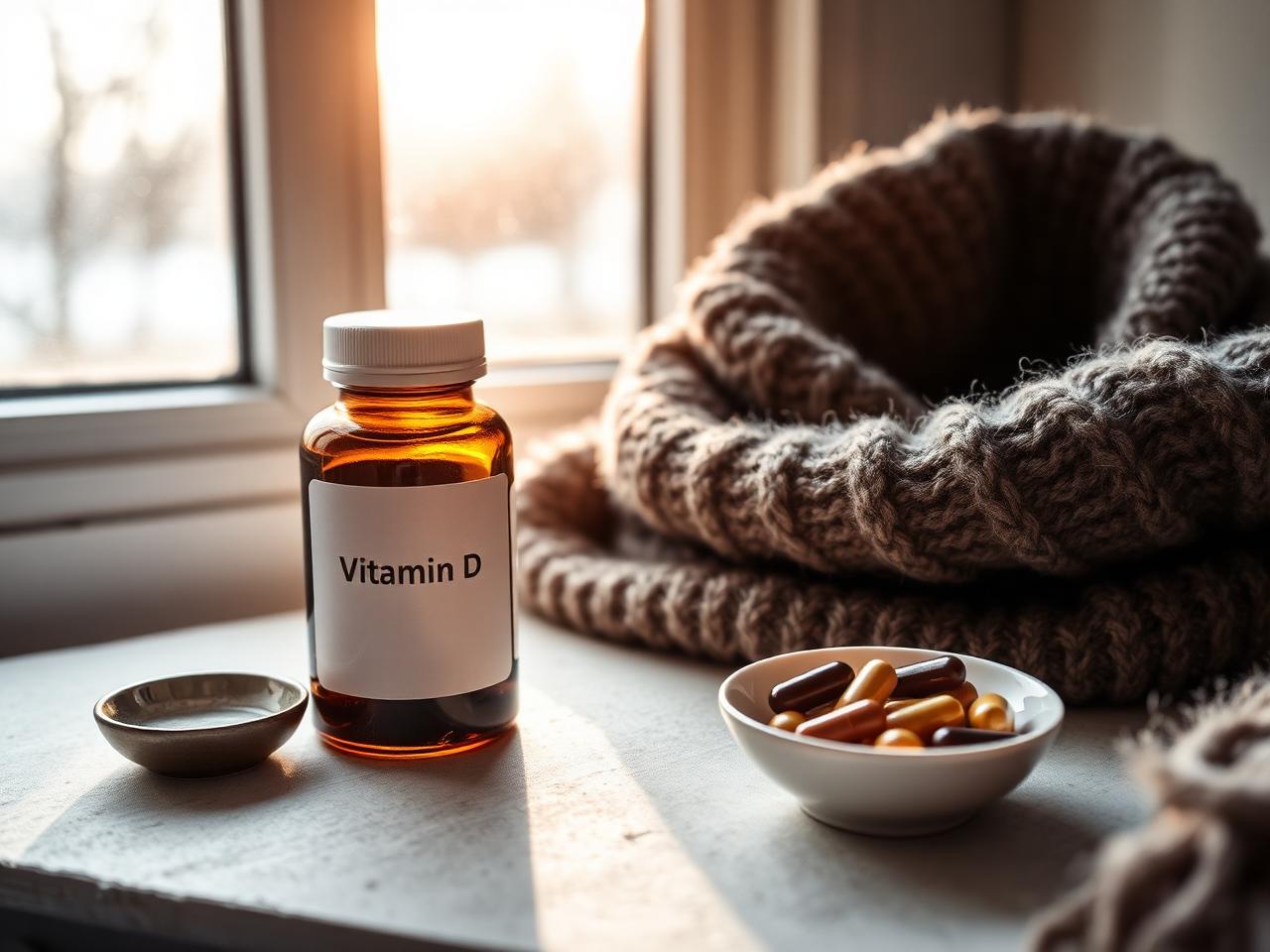
NHS advice is clear: 10 micrograms daily from October to March, and year-round if you cover up or spend little time outdoors. This helps bones, muscles and mood.
Vitamin D is one of the few supplements the NHS actively recommends to almost every adult in the UK, and for good reason: our latitude means sunlight is only strong enough to make vitamin D between April and September, and even then only for people who get outside with skin uncovered around midday. By late autumn, the majority of UK adults are running low, and by February around 40% of women are frankly deficient. Vitamin D deficiency is quietly linked to muscle pain, falls, poor bone density, low mood, immune dysfunction and worsened menopause symptoms — and it's one of the cheapest, safest, easiest deficiencies to fix. In perimenopause, when bones, muscles and mood are all under pressure, keeping vitamin D adequate is genuinely high-yield.
What vitamin D actually does
- Enables calcium absorption from the gut — without it, dietary calcium is poorly used.
- Regulates bone remodelling, muscle strength and neuromuscular coordination — protective against falls.
- Modulates immune function — deficiency is associated with more infections and possibly autoimmune activity.
- Supports serotonin synthesis and mood — deficiency correlates with depressive symptoms, though supplementation isn't a treatment for depression on its own.
- Emerging evidence in vasomotor symptom control, muscle pain, and even cognitive function.
The NHS recommendation for UK adults
- 10 micrograms (400 IU) daily from October to March for everyone.
- Year-round if you cover up for cultural or religious reasons, are mostly indoors, have darker skin, are elderly, are pregnant or breastfeeding.
- Perimenopausal and post-menopausal women fall clearly in the 'take it year-round if in doubt' category.
- Available cheaply as a supermarket or Boots supplement — no prescription needed.
When higher doses help
- Confirmed deficiency on blood test (serum 25-OH vitamin D below 30 nmol/L) — typically 800–2,000 IU daily for 8–12 weeks, then maintenance.
- Severe deficiency (below 25 nmol/L) may need loading doses of 20,000–50,000 IU weekly under GP supervision.
- Malabsorption (coeliac, Crohn's, bariatric surgery, chronic pancreatitis) — higher maintenance often needed.
- Long-term steroid use, anticonvulsants, and some obesity medications reduce absorption.
- Above 4,000 IU/day is only safe under medical supervision — vitamin D is fat-soluble and can accumulate.
Practical tips for absorption
- Take with a meal containing fat — vitamin D is fat-soluble.
- Vitamin D3 (cholecalciferol) is more effective than D2 (ergocalciferol); D3 is standard in UK supplements.
- Consistency beats dose — a daily 1,000 IU is more effective than a weekly 7,000 IU for most people.
- Some evidence supports pairing with vitamin K2 (MK-7) to direct calcium into bones rather than soft tissue.
When to test
- Persistent muscle aches, unexplained fatigue, low mood, or bone pain in perimenopause.
- Diagnosed osteoporosis or osteopenia — repeat at 3–6 months after starting HRT and supplementation.
- History of fragility fracture, falls, or unexplained muscle weakness.
- Autoimmune conditions (thyroid, coeliac, MS) or malabsorption.
- Private tests (Better You, Medichecks, Randox) are widely available if the GP won't repeat one — but be aware target ranges vary.

Food sources — a useful backup, not enough alone
- Oily fish (salmon, sardines, mackerel, trout) — the best natural source.
- Egg yolks, red meat and liver contribute smaller amounts.
- Fortified foods: some breakfast cereals, spreads and plant milks.
- Realistic UK diet contributes maybe 100–200 IU/day — nowhere near enough alone to replace winter sunlight.
Common myths
- 'Sunlight through a window counts' — no. UVB doesn't penetrate glass.
- 'Suncream blocks vitamin D synthesis' — real but small effect; skin cancer risk outweighs.
- 'You can't overdose from the sun' — true, but you absolutely can from supplements taken carelessly.
Key takeaway
Vitamin D is cheap, safe and quietly important in the UK — take it through the darker half of the year (or year-round if you fit any of the risk groups). One of the highest-yield midlife supplements we have.
How Dr Awal approaches this in clinic
Every consultation starts with your full story — symptoms, cycle, medical history, family history and what you've already tried. From there we look at whether hormonal treatment, non-hormonal options, lifestyle changes or a combination will give you the best result, and we tailor the plan to your age, risk factors and preferences.
- A detailed 60 minute first appointment — no rushed 10-minute slots.
- Evidence-based recommendations aligned with NICE NG23 and BMS guidance.
- Body-identical HRT considered first-line where appropriate.
- Shared-care letters sent to your NHS GP so treatment can continue affordably.
- Follow-up at 3 months to fine-tune your regimen and address side effects.
- Ongoing annual reviews so your plan evolves with you.
Common questions we hear about this
Do I need to be at a certain age to be seen?
No. We see women in early perimenopause (often late 30s and 40s), through post-menopause and beyond. Age alone doesn't decide whether treatment is right — symptoms, health history and goals do.
Will my GP continue the prescription?
In most cases yes. After your consultation we send a detailed shared-care letter with the diagnosis, treatment plan and rationale so your NHS GP can prescribe on the NHS. Not every practice accepts shared care — we'll discuss this in your appointment.
What if I've tried HRT before and it didn't suit me?
Very common — often the type, dose or route wasn't right rather than HRT itself. We review what you've tried, why it didn't work, and adjust accordingly. Many women who thought HRT wasn't for them do well on a different preparation.
How long will I need to stay on treatment?
There is no set upper time limit for HRT. Current BMS and NICE guidance supports continuing HRT for as long as the benefits outweigh the risks for you personally. We review this together every year so you stay in control of the decision.
Where do you see patients?
All consultations at Pause and Co Healthcare are conducted securely via video, allowing us to support patients anywhere in the UK. Prescriptions and shared care arrangements are managed in the same way, regardless of your location.
About the author
Dr Nadira Awal is a British Menopause Society Advanced Menopause Specialist with 15+ years' NHS and private experience. She holds the BMS Advanced Certificate in Menopause Care, sits on the BMS Programme Planning Group, and advises the UK Government Menopause Strategy Group. Read her full profile.
Sources & further reading
General information only — not a substitute for personalised medical advice. Always speak to your GP or a menopause specialist about your own situation.
Talk it through
Book a private consultation with Dr Awal
Get evidence-based, personalised advice on vitamin d in menopause and any related concerns.
Related in Weight & Nutrition
Continue reading
Menopause and Weight Gain
Why weight distributes differently in midlife and what to do about it.
Read guide

Losing Menopause Weight
Evidence-based, sustainable strategies for weight change at midlife.
Read guide

Menopause Healthy Diet Plan
What to eat and what to avoid to support hormones and heart.
Read guide